What Happens to Your Home Solar System During Load-Shedding or Heavy Rain?
For South African homeowners, investing in rooftop solar is driven by two main goals: escaping the frustration of unpredictable load-shedding and cutting down on rapidly rising electricity tariffs. But once you start looking seriously at a system, practical anxieties naturally kick in.
What happens when a sudden load-shedding block hits while I’m working from home? Will my system completely shut down during Cape Town’s winter rains or Johannesburg’s intense summer thunderstorms?
If you are worried that your investment will leave you in the dark the moment the sun vanishes or the grid fails, you are not alone. This guide directly addresses the two biggest consumer anxieties regarding home solar systems: how they react to power cuts and how they perform in poor weather.
Part 1: The Load-Shedding Reality – Instant Backup Power
One of the most common misconceptions among absolute beginners is that solar panels alone will keep a house running during a blackout. In reality, standard grid-tied solar systems are legally required to shut down during power cuts to protect utility workers—a safety feature known as anti-islanding protection.
To beat load-shedding, your home needs a hybrid inverter paired with a modern lithium-ion battery backup. When configured correctly, here is how this setup handles an Eskom blackout:
1. Reliable Transfer Times
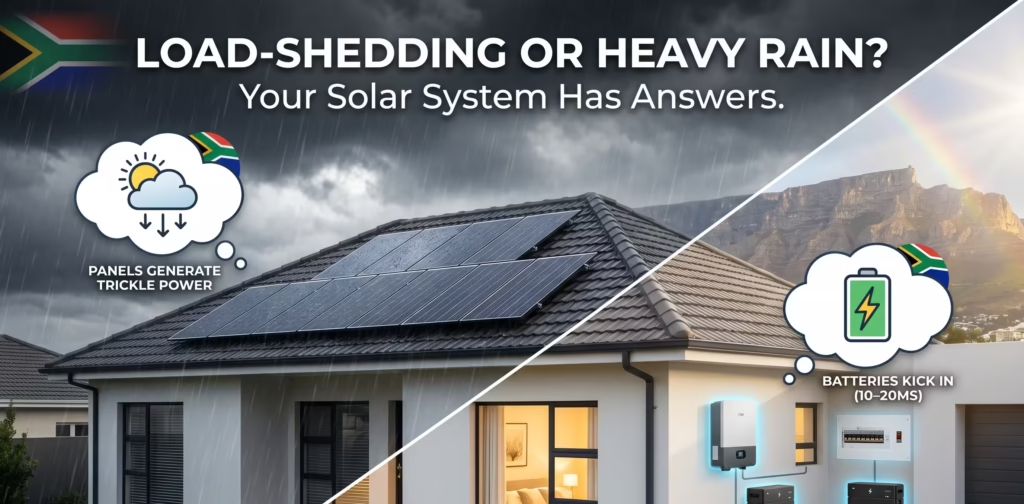
When the municipal grid drops, a hybrid inverter detects the loss of power instantly. The system typically switches over to your household’s pre-wired critical circuits within 10–20 milliseconds, depending on the inverter model and its UPS classification. This transfer is generally fast enough that most household electronics continue operating without any noticeable interruption.
2. Intelligent Power Management
If a load-shedding window occurs during a bright afternoon, a standard residential system manages your energy dynamically based on your installer’s configuration. In a typical daytime backup setup, the inverter prioritizes running your household loads using live power coming from your solar panels. If your appliances require more energy than the panels are generating at that moment, the inverter pulls the exact remaining balance from the battery bank or available grid power.
Part 2: The Rainy Day Reality – Solar Generation Under Clouds
Another massive anxiety for homeowners is that solar panels become completely useless decorations the moment heavy rain or thick cloud cover moves in. While solar production drops significantly during poor weather, it rarely stops completely during daylight hours.
1. The Power of Diffuse Light
Solar panels do not strictly require direct, blinding sunlight to generate electricity. They operate using daylight and solar irradiance. On an overcast or rainy day, sunlight is scattered by moisture particles and clouds in the atmosphere. This is called diffuse light.
Modern monocrystalline solar panels are highly sensitive and specifically engineered to capture this scattered spectrum of light. Depending on cloud density and panel technology, a residential array on a gray day will often still generate a portion of its optimum capacity—frequently estimated between 10% to 25%, though this can drop lower during exceptionally dark storm conditions. While you won’t want to run heavy luxury loads during a storm, your panels will continue trickling power to your home and helping sustain your battery bank.
2. The “Rain Cleaning” Benefit
Heavy rain actually comes with a practical advantage for your system’s long-term maintenance. Over weeks and months, dust, pollen, bird droppings, and soot from pollution accumulate on the glass surface of your panels. This layer of grime blocks sunlight and can subtly degrade your system’s daily yield.
A heavy South African downpour acts as a free cleaning service, washing away caked-on dirt. This ensures that the very next time the sun breaks through the clouds, the panels are cleared of surface obstructions to capture sunlight effectively.
Consumer Checklist: Rain & Outage Protection
To ensure a home solar system behaves exactly the way you expect during bad weather and grid failures, verify these design and installation details with your provider:
- Essential Circuit Separation: Ensure your distribution board (DB box) is divided correctly. Heavy loads (like geysers and stoves) should be separated from your critical backup circuits (lights, plugs, Wi-Fi, security systems) so you don’t accidentally overload the system during an outage.
- Inverter UPS Class: Double-check your hybrid inverter’s specific transfer speed to guarantee sensitive electronics remain stable during load-shedding transitions.
- Weather-Proofing (IP Rating): Ensure your inverter and lithium-ion batteries are installed in a protected environment or feature an appropriate weatherproof rating (such as IP65) if mounted in semi-exposed areas.
Conclusion: Engineered for Resilience
Modern home solar architectures are built to adapt to highly variable conditions. By combining sensitive photovoltaic cells that turn diffuse rain-light into usable power with smart hybrid inverters and lithium-ion batteries that pick up the load during power cuts, a properly sized and professionally engineered system ensures your home remains resilient, powered, and secure through shifting weather and grid challenges.